Planet Sizes, Traits and the Light That Reaches Them
Habitable worlds used to feel interchangeable: same footprint on the map, same blank slate once you landed. That is no longer true. Size shows up from orbit. Surface and traits stay hidden until you send a Solis or Courier. Atmosphere density now decides how much sunlight your solar parks actually catch.
Planet sizes
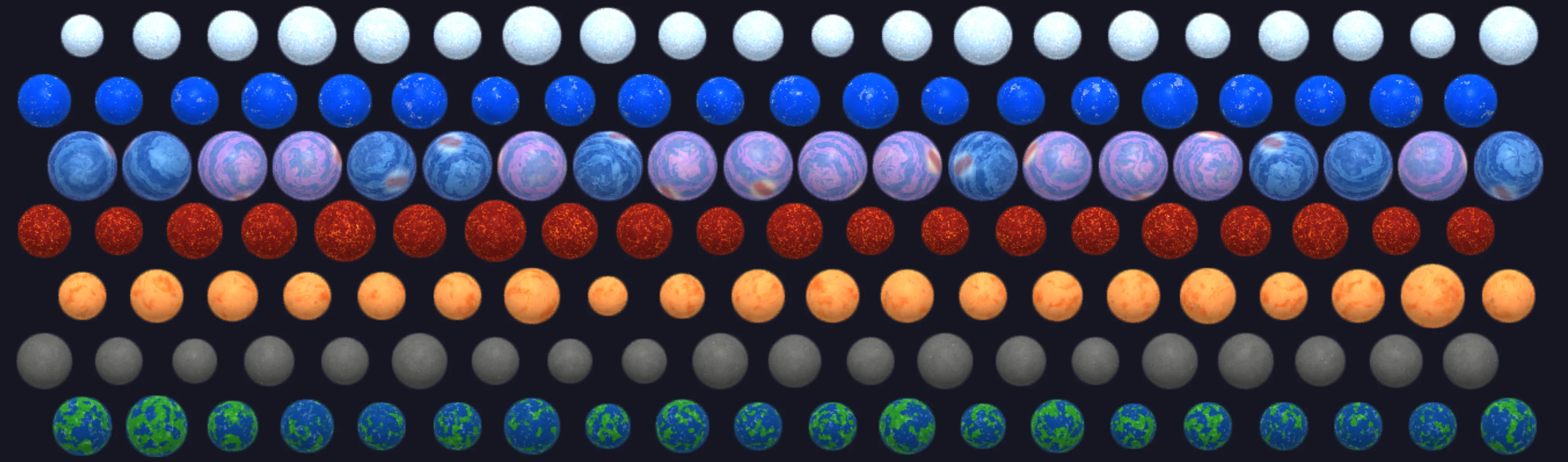
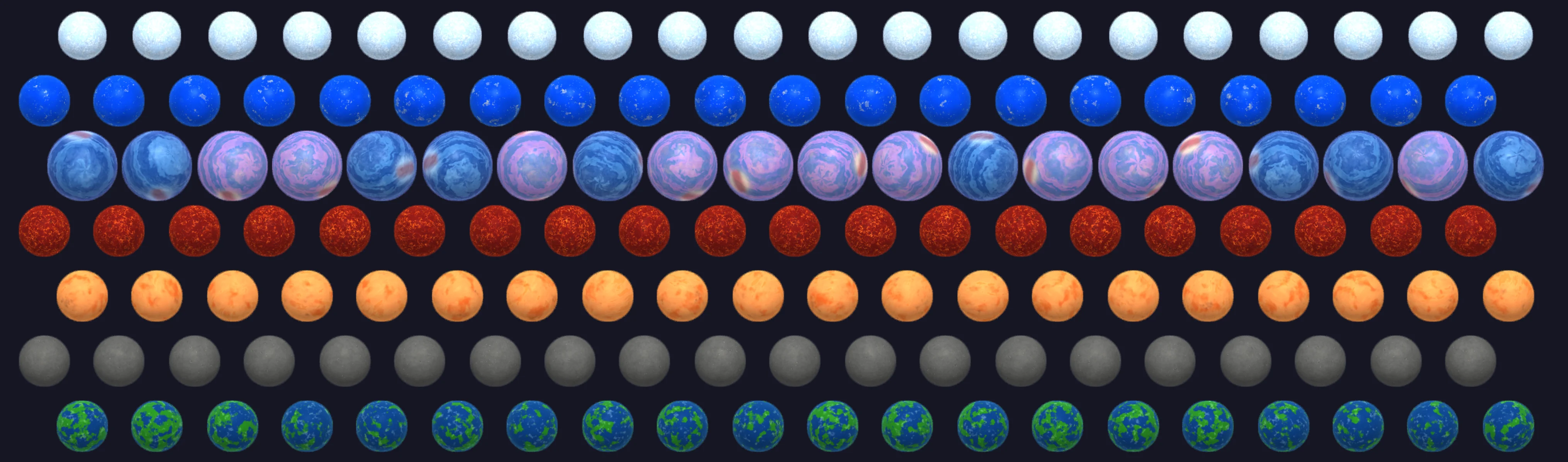
Habitable planets come in small, normal and large. You can see the difference on the galaxy map: larger worlds read as bigger bodies, smaller worlds as tighter ones.
Size is more than cosmetics. A large planet gives you more surface to work with and costs a little more to build on. A small planet is cheaper to develop but leaves less room.
Surveys
Kind and size are visible before you commit. Surface layout and traits are not.
A Solis or Courier can survey a habitable planet: 2 hours and 2,000 energy. When the survey finishes, your activity feed gets an entry with a link to that world.
More on sensor work and surveys: Scanners.
Planet traits
After a survey, many worlds carry one or two traits. They shape the terrain you get and how the colony plays.
Examples:
- Hydrocarbon Seeps push more fuel-rich tiles onto the surface
- Clear Skies or Abundant Solar Window thin the air and favor surface solar
- Difficult Terrain makes building slower and more expensive
- Ring System adds orbital room for stations and shipyards
The full catalog lives on Planets and Stars.
Atmosphere and solar
Star kind and orbit distance set how bright space is around a world.
On the ground, atmosphere gets in the way. Planet type sets a base density. Traits can thicken or thin it further. Thicker air cuts solar park output. Thin air lets more light through.
See Solar park.
What to scout for
Bigger is not always better. Distance to the star still matters for how much light you get. Traits can make even a smaller or farther world a strong pick.
Feel free to use the in-game feedback button '💬' if something about a world surprises you.
Clear skies, commanders.
Ion Space HQ 👋